2015.05.03_IABR 2016 - The next Economy - Call for projects_C

IABR 2016 - The next Economy - Call for projects

3 mei 2015

2 minuten

Nieuws IABR invites urban designers, architects, landscape architects, academics, artists, planners, cities, universities, companies and social organizations, or coalitions thereof, to submit best practices, projects and plans in response to the challenges formulated in the IABR–2016–CALL FOR PROJECTS–.

THE NEXT ECONOMY–

IABR–2016–, having as its theme , will investigate the relationship between spatial design and the (future development of the) economy.

IABR–2016–THE NEXT ECONOMY–

advocates an urban economy that is guided by a social agenda, is motored by meaningful employment, makes prudent use of natural and human capital, and generates greater social inclusion.

IABR–2016

welcomes design that opens up perspectives of a city in which such an economy can flourish. What kind of urbanity does this involve? Are we sufficiently clear on what we’re looking for, where new opportunities will arise? Economists applaud the ‘agglomeration effects’ of the city. Proximity, diversity, and density are considered key to economic success. But what we may need is a completely new take on what the city is.

IABR–2016 is a platform for creative coalitions of designers and other stakeholders with fresh ideas on the possible future of the twenty-first-century city. We will promote dialogue and exhibit designs that open up perspectives of the city we want: a clean city, a communal city, a productive city – a city in which the public space once again occupies center stage.

If you want to submit your project for IABR–2016, please read the Call for Projects and the Curator Statement carefully – they can be downloaded on this page. Then fill in the Application Form and mail it to IABR not later than June 4 2015, 9AM.

The seventh edition of the International Architecture Biennale Rotterdam opens in April 2016.


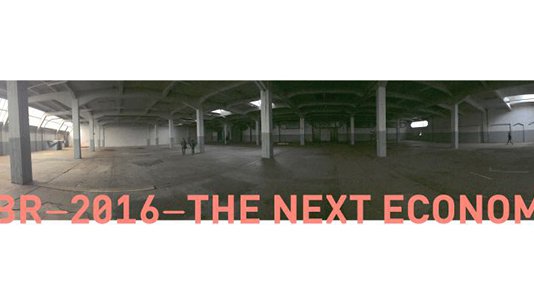
Cover: ‘2015.05.03_IABR 2016 - The next Economy - Call for projects_C’


Meest recent

Flow-woningen Almelo 1 door BAM Wonen (bron: BAM Wonen)

Eerst noodopvang, daarna permanente gezinshuisvesting: de aanpak in Almelo

Het kan in Almelo: volwaardige eengezinswoningen die eerst bewoond worden door Oekraïense ontheemden en daarna door Almelose huishoudens. Met de gemeente in de rol van opdrachtgever.

Interview

24 september 2026

Modern green neighbourhood in Almere door Pavlo Glazkov (bron: Shutterstock)

036 als vliegtuigmaaltijd

Gebiedsontwikkeling levert te vaak wijken op die voelen als vliegtuigmaaltijden, betoogt Martin van der Maas. Deze wijken bevredigen niet, kosten meer dan gedacht en zijn niet flexibel. Hoe kan het beter?

Uitgelicht
Opinie

23 september 2026

Boerderij Veld-Zicht in Utrecht.jpg door Willeke Machiels (bron: Het PON & Telos)

Hoe de Omgevingswet de relatie tussen landbouw en leefomgeving kan versterken

Het boerenerf wordt steeds multifunctioneler, maar het omgevingsbeleid kijkt er nog vaak met een monofunctionele bril naar. Katja Nagelkerke en Joks Janssen laten zien waarom de Omgevingswet helpt met het werken aan een vitaal landelijk gebied.

Uitgelicht
Onderzoek

22 september 2026

Uw gastbijdrage op GO.nu: Over gastbijdragen

Uw gastbijdrage op GO.nu

Wij staan open voor bijdragen uit wetenschap en praktijk. Wij moedigen auteurs aan hun kennis en ervaring te delen.

Over gastbijdragen
Uw project toevoegen: Ga naar de GO-Projectenkaart

Uw project toevoegen

Wilt u graag een gebiedsontwikkeling toevoegen aan de GO-projectenkaart? Vul dan via onderstaande link het formulier in.

Ga naar de GO-Projectenkaart
Uw organisatie bij de SKG: Ga naar de SKG-website

Uw organisatie bij de SKG

Uw organisatie aansluiten op het netwerk van de Stichting Kennis Gebiedsontwikkeling? Neem dan contact op.

Ga naar de SKG-website
Uw bijeenkomst in de agenda: Neem contact op

Uw bijeenkomst in de agenda

U kunt uw gebiedsontwikkeling-gerelateerde evenement aankondigen via onze agenda door contact op te nemen met de redactie.

Neem contact op